Baicalein 90%
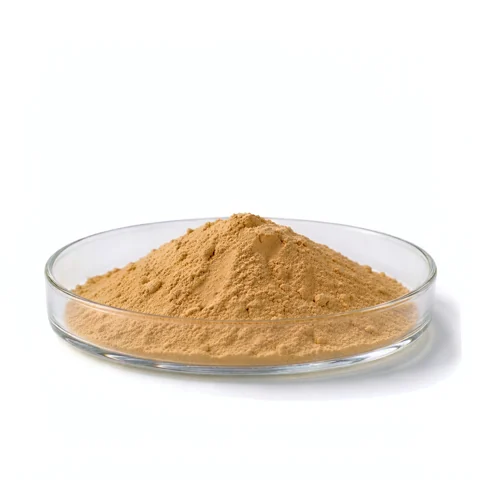
Baicalein (5,6,7-trihydroxyflavone) is the flavone aglycone in Scutellaria baicalensis root, refined after hydrolysis of baicalin. This product is assayed at ≥90% by HPLC, with a manufacturer's test report shipped with every order. Suitable for reference and qualitative research, in vitro experiments, and cosmetic and functional-food formulation development; higher assay and packaging can be customized on request.
Tags:Product Specifications
- Product name
- Baicalein
- CAS
- 491-67-8
- Molecular formula
- C₁₅H₁₀O₅
- Molecular weight
- 270.24
- Botanical source
- Huangqin (Scutellaria baicalensis)
- Origin
- Weinan, Shaanxi
- Plant part
- Dried root
- MOQ
- 1 kg
- Packaging
- 1 kg foil bag / 25 kg fiber drum
- Lead time
- In stock, ships in 3 business days
- Customization
- Custom assay and packaging available
- Sample
- 10–20 g available for evaluation
- Assay
- ≥90%
- Test method
- HPLC
- Appearance
- Pale yellow powder
- Solubility
- Fully soluble in methanol, ethanol, acetone
- Particle size
- 100% through 80 mesh
- Moisture
- 2.36%
- Heavy metals
- ≤10ppm
- Lead
- ≤1.0ppm
- Arsenic
- ≤1.0ppm
- Total plate count
- <100 cfu/g
- E. coli
- Not detected
- Salmonella
- Not detected
Physical & chemical specifications
Heavy metals & microbes
Product Details
Baicalein and baicalin are often confused, but they are not the same: baicalin is a glycoside with a glucuronic acid group and better water solubility, while baicalein is the aglycone after removal of the sugar group, with strong lipophilicity and easier cell-membrane penetration. This product is a high-assay baicalein monomer, not a Scutellaria baicalensis root extract; verify by CAS 491-67-8 when purchasing and do not confuse it with CAS 21967-41-9 (baicalin).
Production path: extract Scutellaria baicalensis root to obtain crude baicalin → enzymatic hydrolysis or acid hydrolysis to remove glucuronic acid → solvent refining, crystallization, drying → pass through 80-mesh sieve. The process uses no benzene-series solvents; the finished product is fully soluble in methanol, ethanol and acetone, convenient for preparing stock solutions.
Common uses: reference and qualitative research, in vitro antioxidant and enzyme-inhibition assays, flavone antioxidant component in cosmetic formulations, and functional-food raw material. The specific scope of use and limits are subject to the regulations of the target market — before exporting to the EU or the US, please confirm the local permitted lists and labeling requirements.
- Solubility difference: Baicalein is strongly lipophilic and slightly soluble in water; baicalin is more water-soluble and better suited to water-based formulations.
- Color difference: This product is a pale yellow powder; baicalin is mostly light yellow to yellow, and shade at the same assay can serve as a rough reference.
- Selection guidance: For quantitative analysis, choose a ≥98% reference standard; the 90% grade is better suited to formulation trials, qualitative identification and in vitro screening.
Botanical Source
Manufacturing
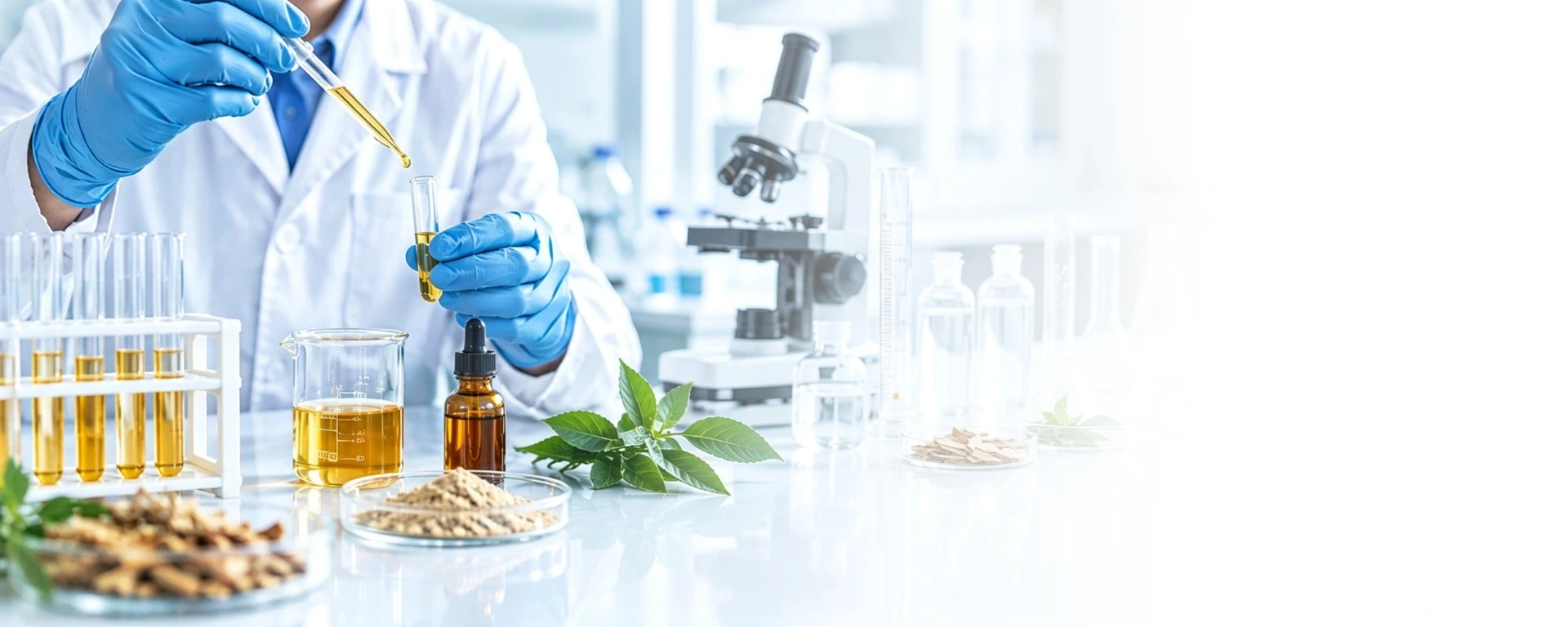
Extraction, conversion and refining are completed in the same facility: Scutellaria baicalensis root is extracted to obtain crude baicalin, which is converted to baicalein by enzymatic hydrolysis removing glucuronic acid, then refined by solvent, crystallized, dried and sieved. The entire process operates in zoned areas per GMP requirements, and batch records are traceable to specific equipment, shifts and operators.
- Cleanliness grade
- Grade D clean area for refining and inner packaging
- Annual capacity
- Extracts 600 t / year
- Certifications
- GMP, ISO 9001, HALAL
Quality & Compliance
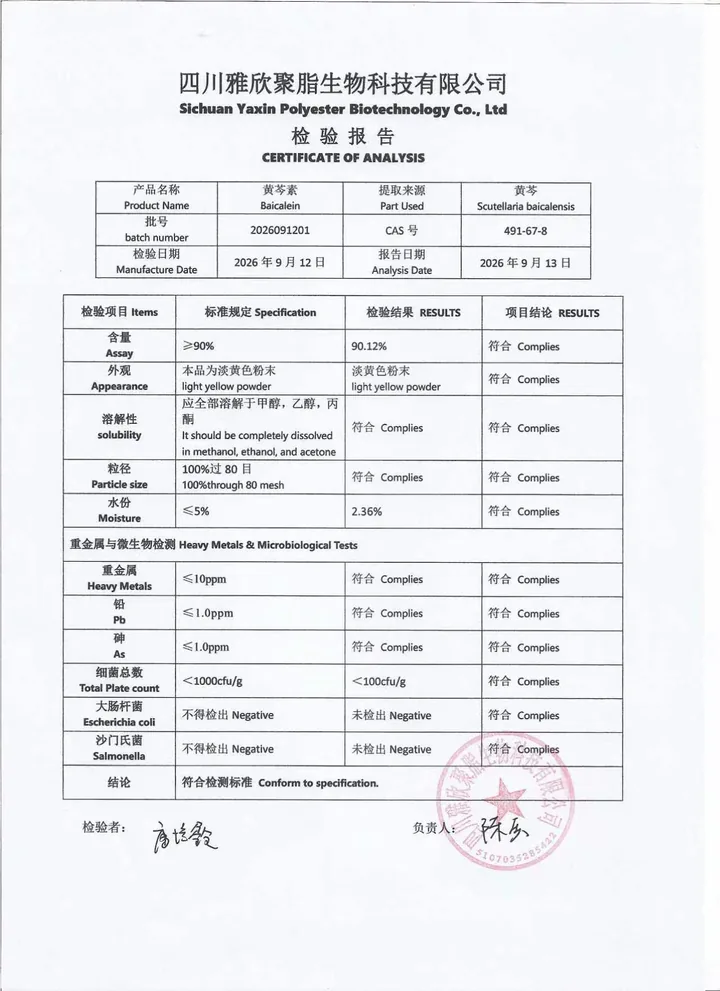
This product is inspected batch by batch against our internal enterprise standards: assay by HPLC external standard method, moisture by oven-drying method, total plate count, E. coli and Salmonella by the GB 4789 series methods, and heavy-metal and microbial limits are shown in the "Product Specifications" table above.
Our production system is certified to GMP and ISO 9001, with in-process release testing at key steps; each batch ships with a same-batch manufacturer's test report, and retesting can be arranged on request. For export orders we can provide supporting documents such as MSDS, non-GMO statement and certificate of origin.
Certificate of Analysis
Packaging & Shipping
25 kg fiber drum is the standard export package, with a double-layer PE bag liner and a batch label on the drum; 1 kg and below use foil bag plus carton, suitable for sampling and small-batch trial production.
- MOQ: 1 kg; full drum 25 kg, better unit price for full-drum orders.
- Lead time: In stock, shipped within 3 business days, excluding holidays.
- Logistics: Domestic express and freight can be arranged; for export we provide MSDS and COA, and can issue non-GMO and certificate-of-origin statements on request.
Storage requirements: Store in a cool, dry place, sealed and protected from light, away from strong oxidizers; shelf life 24 months unopened. After opening, use up promptly and reseal to prevent moisture absorption and caking.
FAQ
What is the difference between baicalein and baicalin?
Baicalin is a glycoside with a glucuronic acid group and good water solubility; baicalein is the aglycone (CAS 491-67-8) after sugar removal, with strong lipophilicity. The two assays are not interchangeable; quotes and contracts must state the product name and CAS clearly.
Can the 90% grade be used as a reference standard?
It is sufficient for qualitative identification, TLC comparison and in vitro screening; for quantitative analysis we recommend a ≥98% reference standard with a certificate number, to avoid assay error entering the test results.
Can you send a small sample first?
Yes, a 10–20 g evaluation sample is available for testing, freight collect; after confirming the quantity, the MOQ is 1 kg.
How to dissolve it?
We recommend dissolving first in a small amount of ethanol or DMSO, then diluting with buffer or culture medium to the target concentration; adding directly to water will suspend and dissolve slowly.
Technical Resources
- Baicalein Baicalein (CAS 491-67-8) — the aglycone form, strongly lipophilic. Covers herb assay to hydrolysis yield, key HPLC test points, and 90%–98% grade selection, with real batch COA data.
- Baicalein specifications and test methods
- Baicalein safety and regulatory status
- Baicalein procurement guide