Dioscin 40% (from Chinese yam)
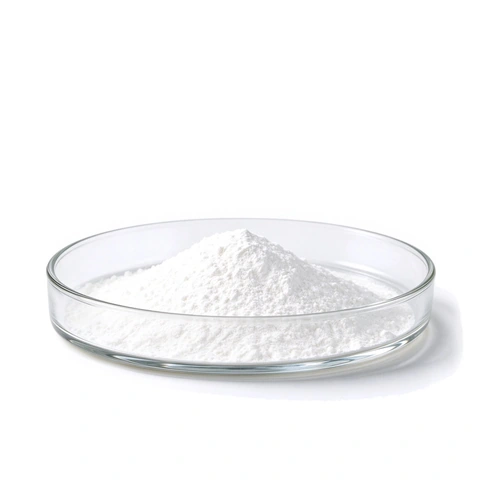
Dioscin is a steroidal saponin with sugar chains. This product is an extract of Chinese yam (Dioscorea opposita Thunb.) rhizome, assayed at ≥40% as dioscin, this batch 42.02% actual, with a manufacturer's test report shipped with every order. Suitable for saponin research and qualitative identification, and health-food and cosmetic formulation development.
Tags:Product Specifications
- Product name
- Chinese yam extract (Dioscin 40%)
- CAS
- 19057-60-4
- Molecular formula
- C₄₅H₇₂O₁₆ (dioscin)
- Molecular weight
- 869.04
- Botanical source
- Chinese yam (Dioscorea opposita)
- Plant part
- Rhizome
- MOQ
- 1 kg
- Packaging
- 1 kg foil bag / 25 kg fiber drum
- Lead time
- In stock, ships in 3 business days
- Customization
- Custom assay and packaging available
- Sample
- 10–20 g available for evaluation
- Test basis
- Enterprise standard (full test)
- Assay (as dioscin)
- ≥40% (batch 42.02% actual)
- Appearance
- Off-white powder
- Clarity
- Clear when dissolved in 1% ethanol solution
- Melting point
- 206℃
- Specific rotation
- -123.5°
- Moisture
- 0.57%
- Heavy metals
- ≤10ppm
- Lead
- ≤0.5ppm
- Arsenic
- ≤1.0ppm
- Cadmium
- ≤0.5ppm
- Total plate count
- <1000 cfu/g
- Molds
- <100 cfu/g
- E. coli
- Not detected
Physical & chemical specifications
Heavy metals & microbes
Product Details
Dioscin (CAS 19057-60-4) is a steroidal saponin with sugar chains; it and the sapogenin diosgenin (CAS 512-04-9) are two different things: dioscin is mostly used for component research and formulation development, while diosgenin is mainly used for steroid hormone synthesis. This product is a Chinese yam extract, assayed at ≥40% as dioscin, this batch 42.02% actual. Verify by CAS 19057-60-4 when purchasing and do not confuse it with diosgenin.
Production path: extract Chinese yam rhizome → refine → dry and sieve. This product is an off-white powder, clear when dissolved in 1% ethanol solution; this batch's melting point is 206℃, specific rotation -123.5°, and moisture 0.57%.
Common uses: saponin component research and qualitative identification, and raw material for health-food and cosmetic formulation development. The specific scope of use and limits are subject to the regulations of the target market — before exporting, please confirm the local permitted lists and labeling requirements.
- Difference from diosgenin: glycoside vs. aglycone, with different CAS numbers and uses; quotes and contracts must always state the product name and CAS clearly.
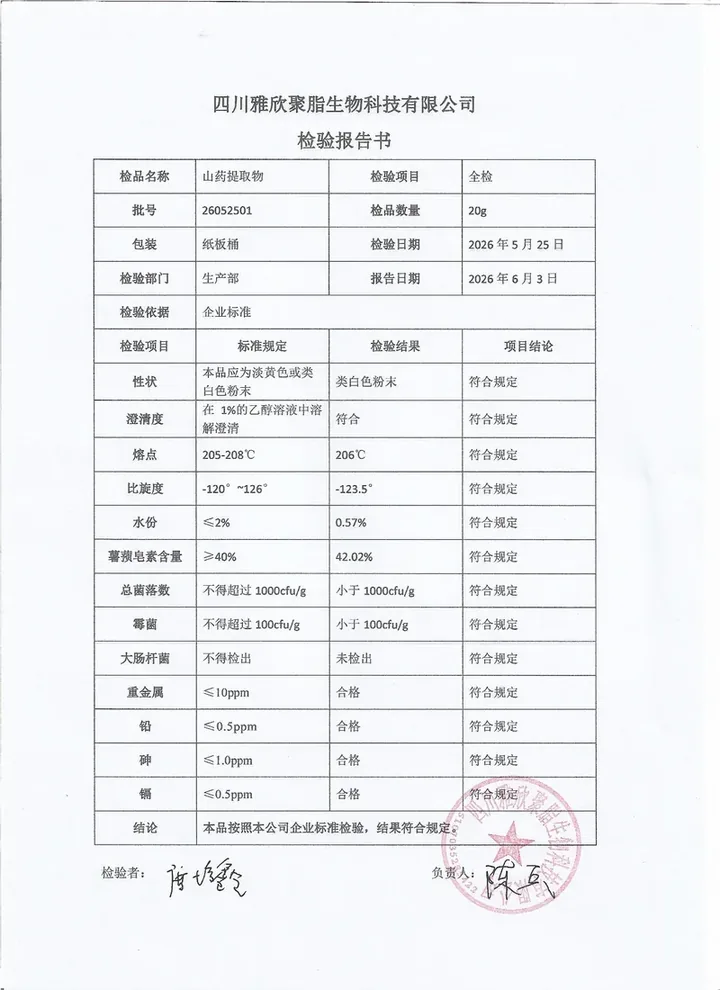
- Report scope: This batch's in-house test report covers description, clarity, melting point, specific rotation, moisture, assay, plus heavy metals, total plate count, molds and E. coli, with the conclusion that it conforms to specification; Salmonella is not listed separately, and supplementary testing can be arranged if needed.
- Selection guidance: The 40% grade is suitable for formulation prototyping and further extraction processing; for higher-purity dioscin monomer, contact us for custom production.
Botanical Source
Manufacturing
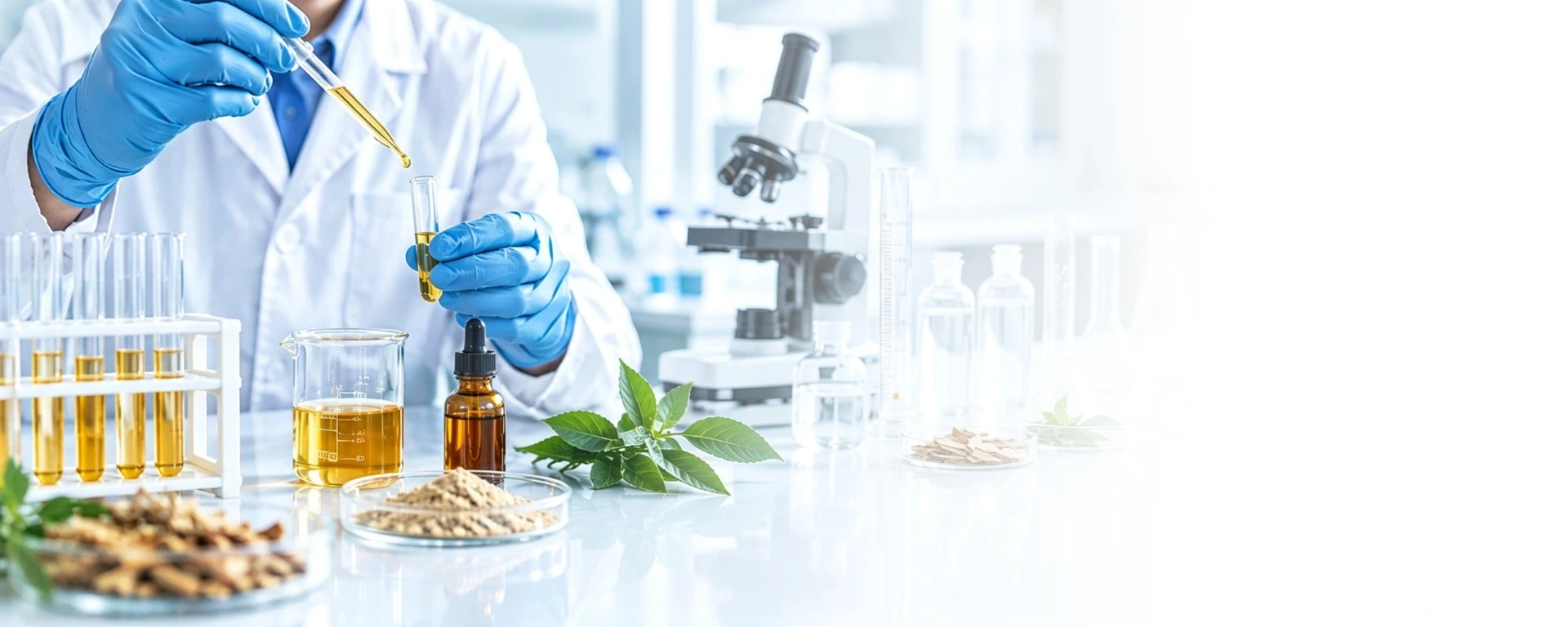
The extraction and refining of Chinese yam rhizome are completed in the same facility: the rhizome is solvent-extracted, refined, dried and sieved to obtain a standardized dioscin extract. The entire process operates in zoned areas per GMP requirements, and batch records are traceable to specific equipment, shifts and operators.
- Cleanliness grade
- Grade D clean area for refining and inner packaging
- Annual capacity
- Extracts 600 t / year
- Certifications
- GMP, ISO 9001, HALAL
Quality & Compliance
This product is fully tested batch by batch against our enterprise standard: for this batch (26052501) the report covers description, clarity, melting point, specific rotation, moisture, dioscin assay, plus heavy metals, total plate count, molds and E. coli, and the conclusion is that it conforms to specification.
Our production system is certified to GMP and ISO 9001, with in-process release testing at key steps; each batch ships with a manufacturer's test report (test department: production; test basis: enterprise standard). For extended items such as Salmonella, or retesting, please arrange in advance. For export orders we can provide supporting documents such as MSDS, non-GMO statement and certificate of origin.
Certificate of Analysis
Packaging & Shipping
25 kg fiber drum is the standard export package, with a double-layer PE bag liner and a batch label on the drum; 1 kg and below use foil bag plus carton, suitable for sampling and small-batch trial production.
- MOQ: 1 kg; full drum 25 kg, better unit price for full-drum orders.
- Lead time: In stock, shipped within 3 business days, excluding holidays.
- Logistics: Domestic express and freight can be arranged; for export we provide MSDS and COA, and can issue non-GMO and certificate-of-origin statements on request.
Storage requirements: Store in a cool, dry place, sealed and protected from light, away from strong oxidizers; shelf life 24 months unopened. After opening, use up promptly and reseal to prevent moisture absorption and caking.
FAQ
What is the difference between dioscin and diosgenin?
Dioscin is a glycoside with a sugar chain (CAS 19057-60-4), while diosgenin is the aglycone after the sugar chain is removed (CAS 512-04-9). The two differ in CAS and use; quotes and contracts must always state the product name and CAS clearly to avoid confusion.
Why 40% instead of a higher assay?
40% is the economical grade for natural extraction from Chinese yam rhizome, suitable for formulation prototyping and further extraction processing; for higher-purity dioscin monomer, contact us for custom production.
Does the test report include Salmonella?
This batch's report does not list Salmonella separately; total plate count, molds and E. coli all conform to specification. If Salmonella testing is required, supplementary testing can be arranged and provided with the shipment.
Can you send a small sample first?
Yes, a 10–20 g evaluation sample is available for testing, freight collect; after confirming the quantity, the MOQ is 1 kg.
Technical Resources
- Yam extract Yam extract (Diosgenin 40%) — made from pharmacopoeial Dioscorea opposita; the 40% figure is an aglycone basis after enrichment. 40% total saponins converts to only ~19%, so compare prices on a per-kg diosgenin basis.
- Yam extract specifications and test methods